
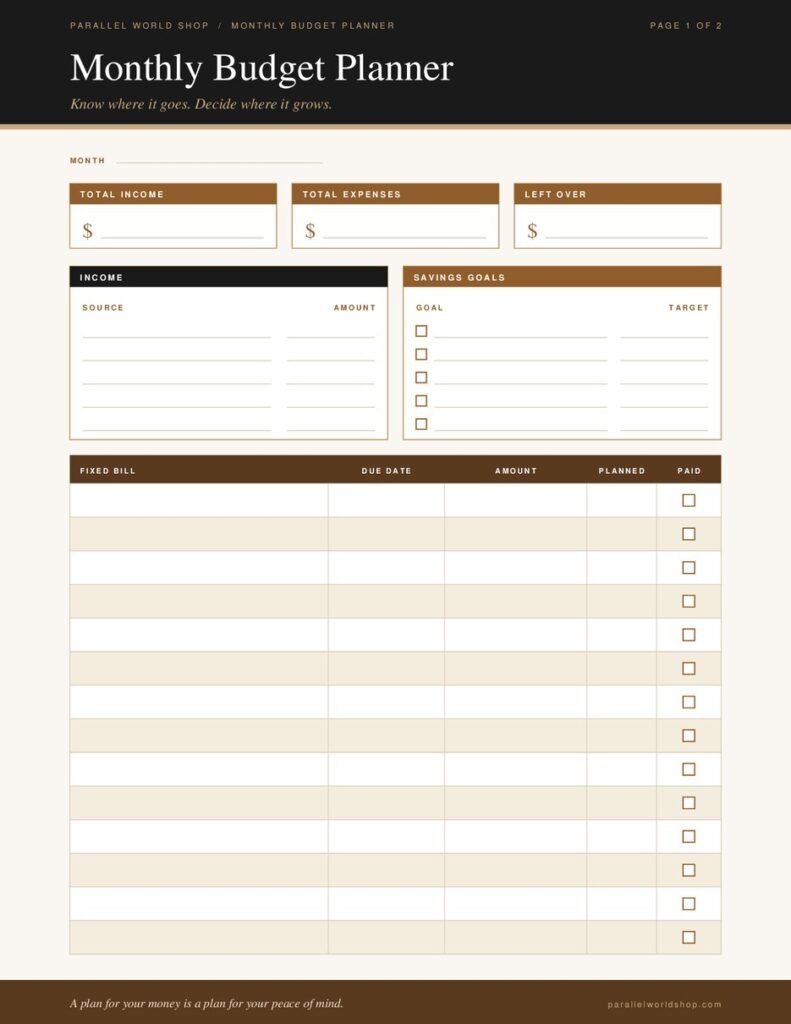
If you have never made a budget, the idea can feel heavy. Spreadsheets, apps, rules and numbers all at once. The truth is much simpler. A monthly budget is just a plan for your money written on one page, and you can build your first one in about 30 minutes. This step by step guide shows how to make a monthly budget for beginners, with a free printable to fill in as you go.
What is a monthly budget, really?
A monthly budget is a list of the money you expect to receive and the money you plan to spend over the next month. It answers three questions: how much comes in, where does it go and what is left. Once you can see those numbers, you can make calmer decisions, avoid surprises and start saving for the things that matter to you.
What you will need
- Your last one or two bank or card statements
- Your pay dates and amounts
- A list of regular bills and due dates
- A pen and our free Monthly Budget Planner
Step 1: List your income
Write down every source of money for the month: salary, side jobs, freelance work and any regular gifts or benefits. If your income changes from month to month, use the lowest amount you usually receive. It is safer to plan with a smaller number and be pleasantly surprised than the other way around.
Step 2: Write down your fixed bills
Fixed bills stay about the same each month: rent or mortgage, phone, internet, insurance, subscriptions and loan payments. List each one with its due date and amount. The planner has a 14-row bills table with a paid checkbox, so you can tick each bill off when it goes out.
Step 3: Plan your flexible spending
Flexible spending changes from month to month: groceries, dining out, transport, health, shopping, hobbies and gifts. Look at your last statements and add up what you actually spent in each category. Write that amount as your starting plan. Do not judge yourself. The goal is to see reality first, then adjust.
Step 4: Set a savings goal
Even a small amount counts. Choose a goal, such as a small emergency fund, a trip or a holiday gift budget, and decide how much to set aside each month. Many beginners start with 5 percent of income and increase slowly. See our Holiday Gift Budget Tracker if you are saving for the holidays.

Step 5: Subtract and adjust
Add up your income, then subtract your fixed bills, flexible spending and savings. If the number is positive, you have a plan. If it is negative, look for one or two categories to reduce. Small changes in dining out or subscriptions often make the biggest difference.
Step 6: Track and review
Keep the planner somewhere you can see it. Fill in actual amounts as the month goes on, and spend ten minutes at the end of the month to compare plan and reality. The difference column shows where you did better or worse. Next month, adjust the numbers and try again.
Common beginner mistakes
- Forgetting yearly costs. Annual fees and gifts catch many people by surprise. Divide them by twelve and add them to the monthly plan.
- Being too strict. A budget with no fun money is hard to keep. Add a small amount for treats.
- Giving up after one bad month. A budget is a tool. Adjust it and keep going.
- Not tracking. A plan only works if you compare it with real life.
Try a no-spend day challenge
Page 2 of the planner includes a grid for no-spend days. Color a circle for every day you spend nothing beyond your essentials. It is a gentle, visual way to build awareness, and many people find that a few no-spend days each week add up quickly.

Keep your paperwork tidy
A small pouch, such as the Small Steps, Big Dreams accessory pouch, keeps receipts, cards and notes in one place. Pair it with a weekly planner from our Weekly Reset Planner and a habit of ten quiet minutes every Sunday. Our guide to how to use a 2027 planner has more tips for building the habit.
Budgeting gifts and holidays
The holidays are where many budgets break. Decide your gift budget in advance, list everyone you want to buy for and check delivery times. Our items are made to order, so check the Christmas 2026 order-by dates and see gifts under $25 for ideas that are kind to your plan.

How to make a monthly budget: FAQ
How do I make a monthly budget for beginners?
List your income, write your fixed bills, estimate flexible spending from past statements, set a small savings goal and subtract. Then track actual spending and review at the end of the month.
How long does it take to make a budget?
About 30 minutes the first time, and 10 minutes a month after that.
What percentage of income should I save?
Many people start with about 5 to 10 percent and increase over time, but the right amount depends on your situation.
Is a paper budget better than an app?
Neither is better. Paper is simple, visual and easy to start, while apps can be faster for tracking. Choose the one you will actually use.
What should I do if I overspend?
Do not panic. Note where it happened, adjust next month and keep going.
This article is general information, not financial advice.