
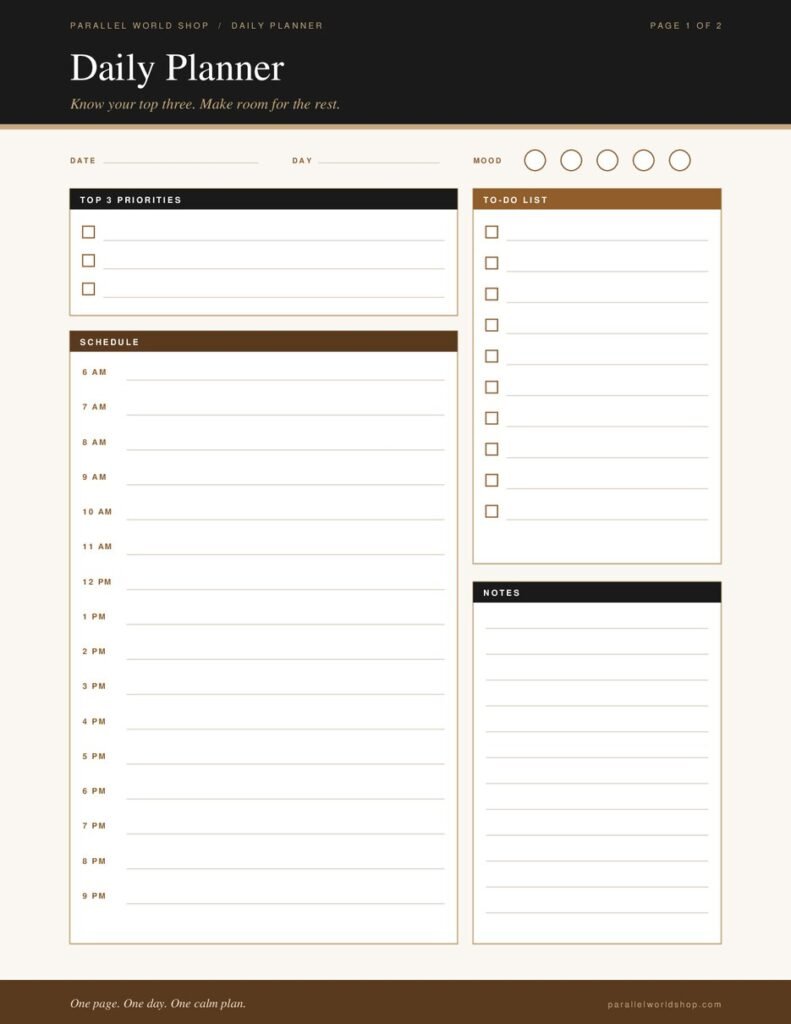
Some days feel like they run you instead of the other way round. Emails pile up, small tasks multiply and by evening you wonder what you actually got done. The fix is not more willpower. It is a simple plan written down before the day begins. This guide shows how to plan your day step by step, in about ten minutes, with a free printable daily planner to follow along.
Why planning your day helps
A written plan clears your head. When tasks live on paper, your brain does not need to hold them, and you can focus on one thing at a time. A plan also shows you what is realistic. Many people try to fit twelve hours of work into eight, and a schedule makes that visible before you start. Finally, a plan gives you a clear finish line, so you can rest without guilt.
What you need
- Our free Daily Planner
- A pen
- Ten quiet minutes, in the evening before or at the start of the morning
Step 1: Do a quick brain dump
Write down everything on your mind: tasks, errands, reminders, worries. Do not sort them yet. A brain dump takes two or three minutes and gives you a complete picture. Use the to-do list or the notes box on the planner.
Step 2: Choose your top three priorities
Look at the list and pick the three things that matter most today. Not ten. Three. Ask yourself, if I only finish these, will the day feel successful? Write them at the top of the page. Everything else is a bonus. This simple limit is the most powerful part of the method.
Step 3: Block time on the schedule
The planner has an hourly schedule from 6 AM to 9 PM. Start by placing fixed commitments such as meetings, school pick-up or appointments. Then add your top three priorities in the times when you have the most energy. If you are sharp in the morning, put the hardest task first. Leave gaps between blocks, because tasks nearly always take longer than expected.
Step 4: Add small tasks to the to-do list
Quick jobs, such as sending a message or paying a bill, go on the to-do list. Group them into one block of 30 minutes so they do not break up your focus. Tick each one off as you finish. The small hit of satisfaction helps you keep going.
Step 5: Protect breaks and meals
A realistic plan includes rest. Add a lunch break, a short walk and a few minutes of nothing. Try the 50 and 10 rhythm: work for 50 minutes, rest for 10. Breaks protect your focus and keep you from running out of energy by mid afternoon.
Step 6: Do an evening review
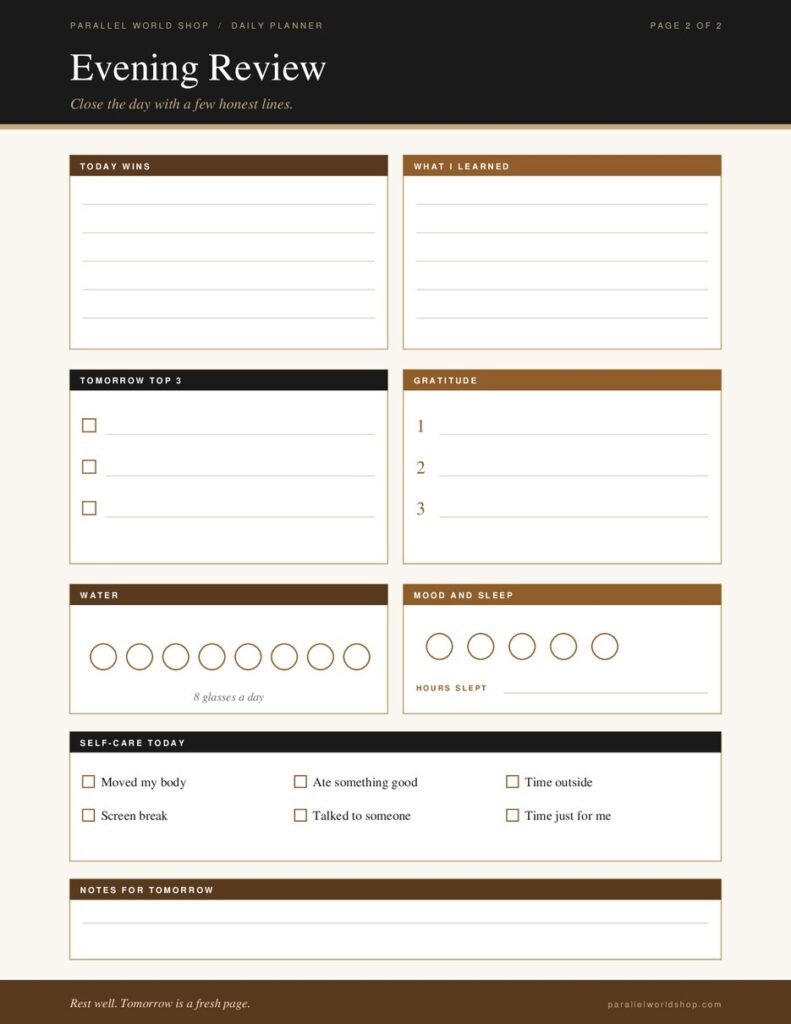
Page 2 of the planner is a short review. Write your wins, what you learned and your top three for tomorrow. Add three things you are grateful for, and note your water, mood and sleep. Five minutes of review makes tomorrow morning easy, because the plan is half done.
Common planning mistakes
- Planning too much. If the schedule is full, nothing is flexible. Plan about 60 to 70 percent of your time.
- Ignoring energy. Put hard tasks when you feel best.
- Skipping the review. The review is what makes the habit work.
- Being perfectionist. A plan is a guide. Move things around when life happens.
Set up a desk you enjoy sitting at
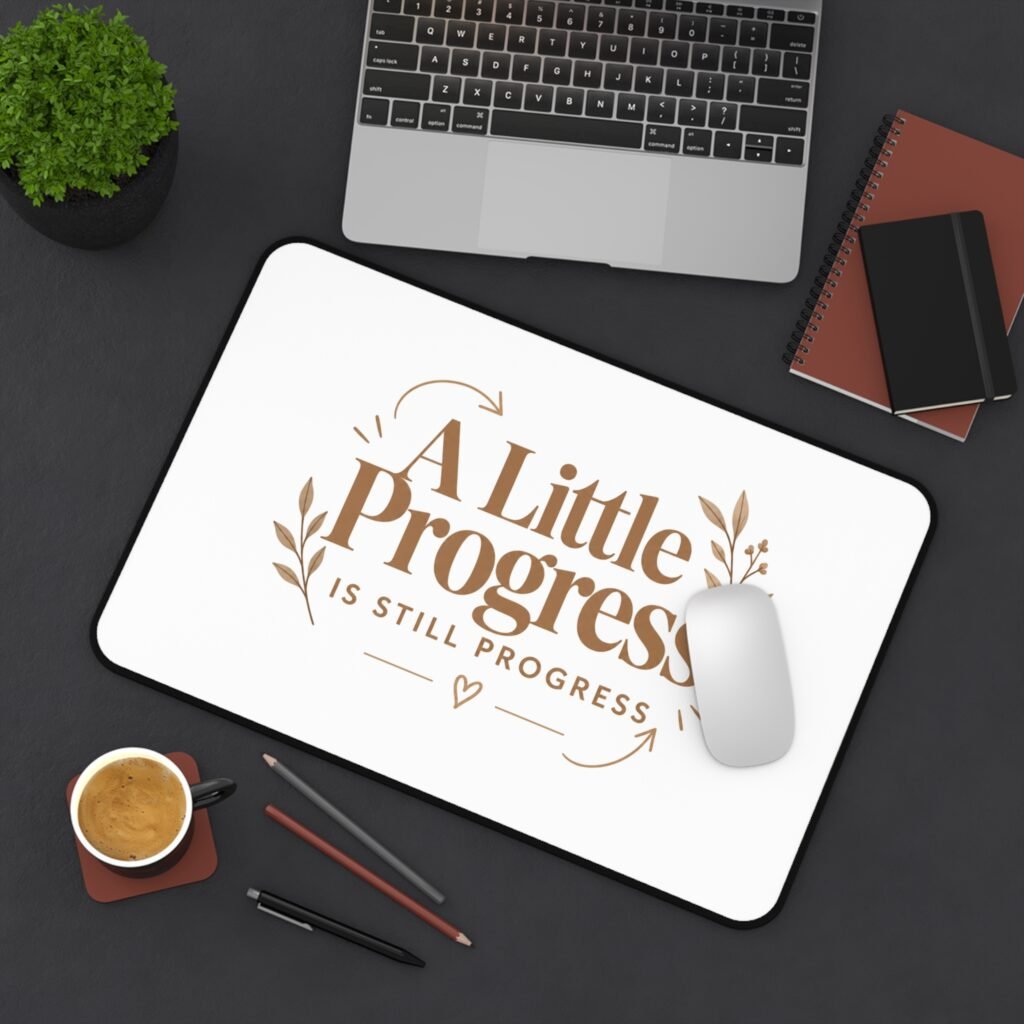
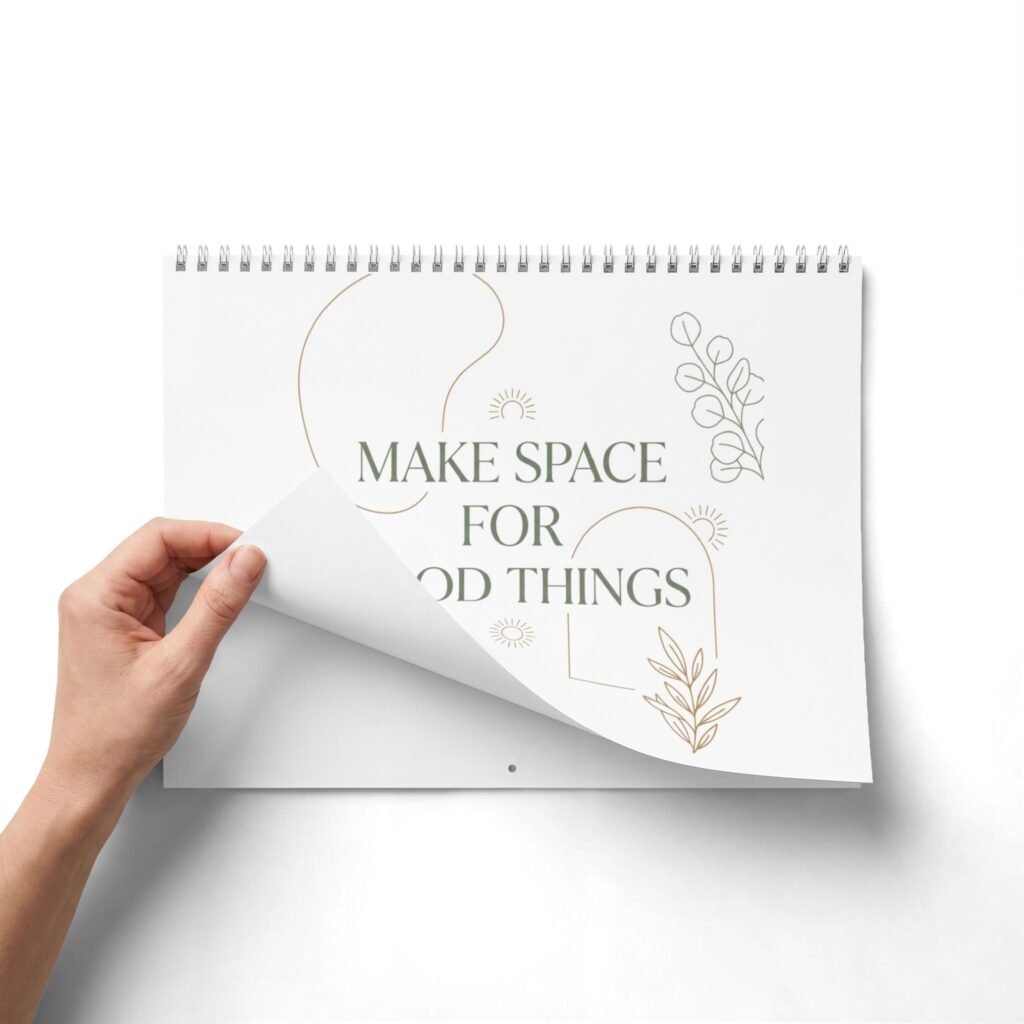
A comfortable workspace makes planning easier. A tidy surface, a desk mat and a cozy drink help you start. See our home desk setup ideas and slow morning routine ideas for more inspiration. A wall calendar such as the Make Space for Good Things wall calendar gives you a view of the whole month at a glance.
Combine it with weekly and monthly planning
A daily plan works best when it is part of a bigger system. Plan the week with our Weekly Reset Planner, set direction with the Monthly Goal Setting Worksheet and build routines with the 30-Day Habit Tracker. For more tips, read how to use a 2027 planner. Looking for a planner gift? See gifts for journal lovers and planners. Our items are made to order, so if you are buying for the holidays, check the Christmas 2026 order-by dates first. Most orders are produced in 3 to 5 business days, plus shipping.
How to plan your day: FAQ
How do I plan my day step by step?
Brain dump your tasks, choose three priorities, block time on a schedule, add small tasks to a to-do list, protect your breaks and finish with a short evening review.
How long should planning take?
About ten minutes, either the evening before or first thing in the morning.
Should I plan the night before or in the morning?
Both work. Many people prefer the evening, because they wake up with a plan. Choose the time you will actually keep.
How many tasks should I plan?
Three priorities plus a short list of small tasks. A shorter list is easier to finish.
What if my plan falls apart?
Take a breath, look at your top three and reschedule the rest. A plan is a tool, not a test.