
A year in pixels is one of the simplest and most satisfying ways to track your mood. Each day gets one tiny square, and each square gets one color. By the end of the year, you have a colorful picture of how your days actually felt, instead of a vague memory.
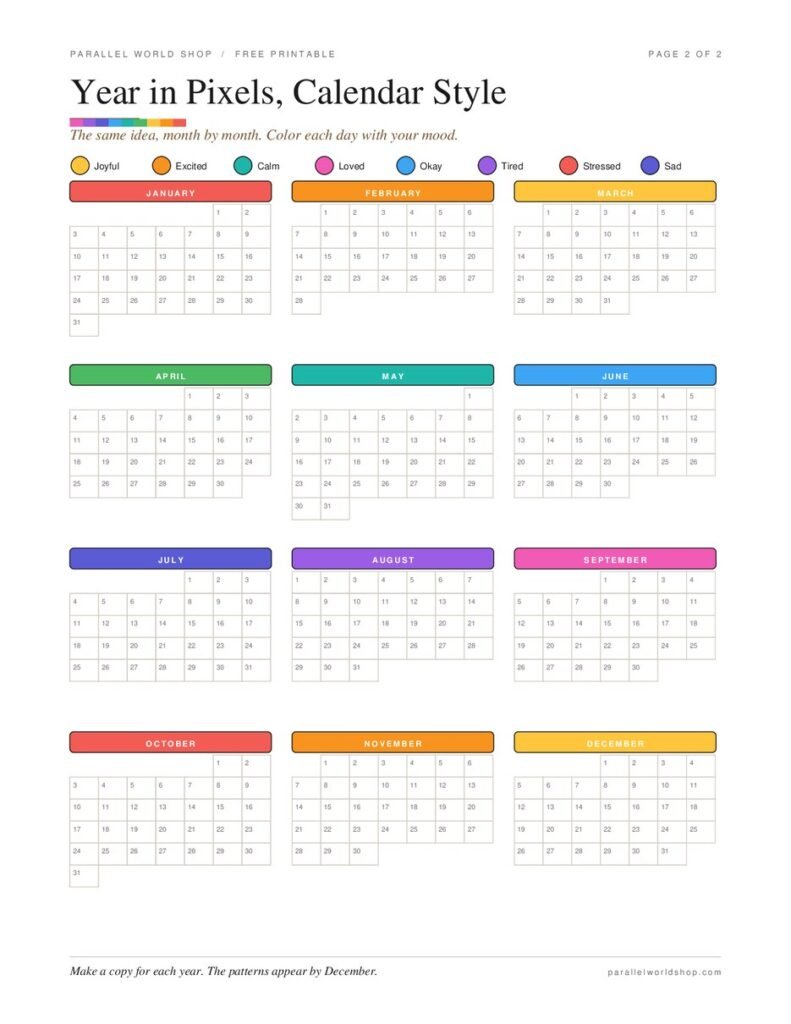
This guide explains what a year in pixels is, how to set one up, which color systems work and how to read the result. You can follow along with our free Year in Pixels mood tracker for 2027. It is a 2-page PDF with a classic grid and a calendar-style version.
What is a year in pixels?
A year in pixels is a grid with 12 columns for the months and up to 31 rows for the days. Every box is one day. At the end of each day, you color the box with the color that matches your mood. Because each box is tiny, it only takes a few seconds, which is why the habit is easy to keep.
Why it works
- It is quick. Ten seconds a day is realistic even on a busy day.
- It shows patterns. You may notice that Mondays are tired or that weekends with friends are bright.
- It is not a diary. You do not need to explain anything. This is helpful when you do not feel like writing.
- It is satisfying. Watching the grid fill up is motivating in itself.
How to set it up
- Print the grid. Use regular paper, or light cardstock if you plan to hang it. Our guide to printing a PDF at home has simple tips.
- Choose your moods. Between 5 and 8 is a good number. More than that gets confusing.
- Assign colors. Fill in the legend before you begin, so you do not change your mind halfway.
- Pick a spot. Keep the sheet and your pens together where you will see them, such as next to the bed or on the desk.
- Set a reminder. A daily alarm at the same time helps for the first few weeks.
Mood ideas and color systems
There is no right way to do it. Here are three common systems:
The classic eight moods
Joyful, excited, calm, loved, okay, tired, stressed and sad. This is the system built into our printable, and it covers most days without being too complicated.
A simple five-step scale
Use one color gradient from great to rough, for example dark green, light green, yellow, orange and red. It is quick to read and easy to learn.
Themes instead of moods
Some people track something other than mood: sleep quality, energy, how much they moved, or whether it was a work day, a rest day or a travel day. The grid works for any single thing you want to see over a year.
Tips for choosing colors
- Pick colors that are easy to tell apart, so avoid two similar blues.
- Use bright colors for good days if you want the grid to feel cheerful.
- Do not use gray for sad days if gray also stands for okay days. Keep each color for one meaning.
- Colored pencils, markers and gel pens all work. Test your pen on the back of the page first.
What if you miss a day?
It happens, and it does not ruin the tracker. You can color the box later based on what you remember, or leave it blank. Blank boxes are part of the story too. Just continue the next day without guilt.
How to read your year
At the end of each month, look at the row for a minute. Ask yourself:
- Which color appeared most?
- Were there patterns by day of the week?
- What was happening on the brightest days?
- What could I do more of, or less of?
You can pair this with a short reflection. Our end of year reflection questions are a good fit for December, and gratitude journal prompts work well for months when the grid looks gloomy.
Other ways to use a pixel grid
- As a family project. Give each person a column and a color.
- For a school year. Use a shorter grid that runs from September to June.
- As wall art. At the end of the year, frame the finished sheet. It is a one-of-a-kind picture. For sizing tips, see our poster size guide.
- As a gift. Pair a printed grid with a set of colored pencils. See gifts for journal lovers and planners for more.
Year in pixels: FAQ
How long does it take each day?
About ten seconds. You are only coloring one small square.
Do I need special pens?
No. Colored pencils, markers or even highlighters work. Choose whatever you have.
Is the printable free?
Yes. You can download it from our free printables page without signing up.
Can I start in the middle of the year?
Of course. Start on today, and leave the earlier boxes blank or fill them in from memory.
Is this the same as therapy or a diagnosis?
No. It is a simple self-tracking habit. If you notice a long stretch of low days and feel worried, it is a good idea to talk to someone you trust or a health professional.