A good product photo does not need a studio. Most of the clean, well-lit t-shirt photos you see saved thousands of times on Pinterest are shot on a table, near a window, with almost no equipment. Here is how to photograph a t-shirt for Pinterest using a flatlay, the simplest and most forgiving method for graphic tees.
Why flatlay works so well for t-shirts
A flatlay is a photo shot straight down at an item arranged on a flat surface. For a t-shirt, that means the whole design is visible, flat and undistorted, without needing a model, a mannequin or a steamer. It is also the format Pinterest tends to favor: clean, vertical, and easy to understand at a glance.
What you actually need
- A flat surface: a table, the floor, or a large piece of poster board
- A window with soft daylight, ideally not direct sun
- A phone camera
- A few pins or small pieces of tape (optional, for shaping the shirt)
Nothing here needs to be expensive. The two things that matter most are light and a plain background.
Step-by-step flatlay setup
1. Find soft, even light
Shoot near a window on an overcast day, or a bright room out of direct sunlight. Direct sun creates harsh shadows and can wash out a print. If the light feels too strong, a sheer curtain diffuses it.
2. Choose a simple background
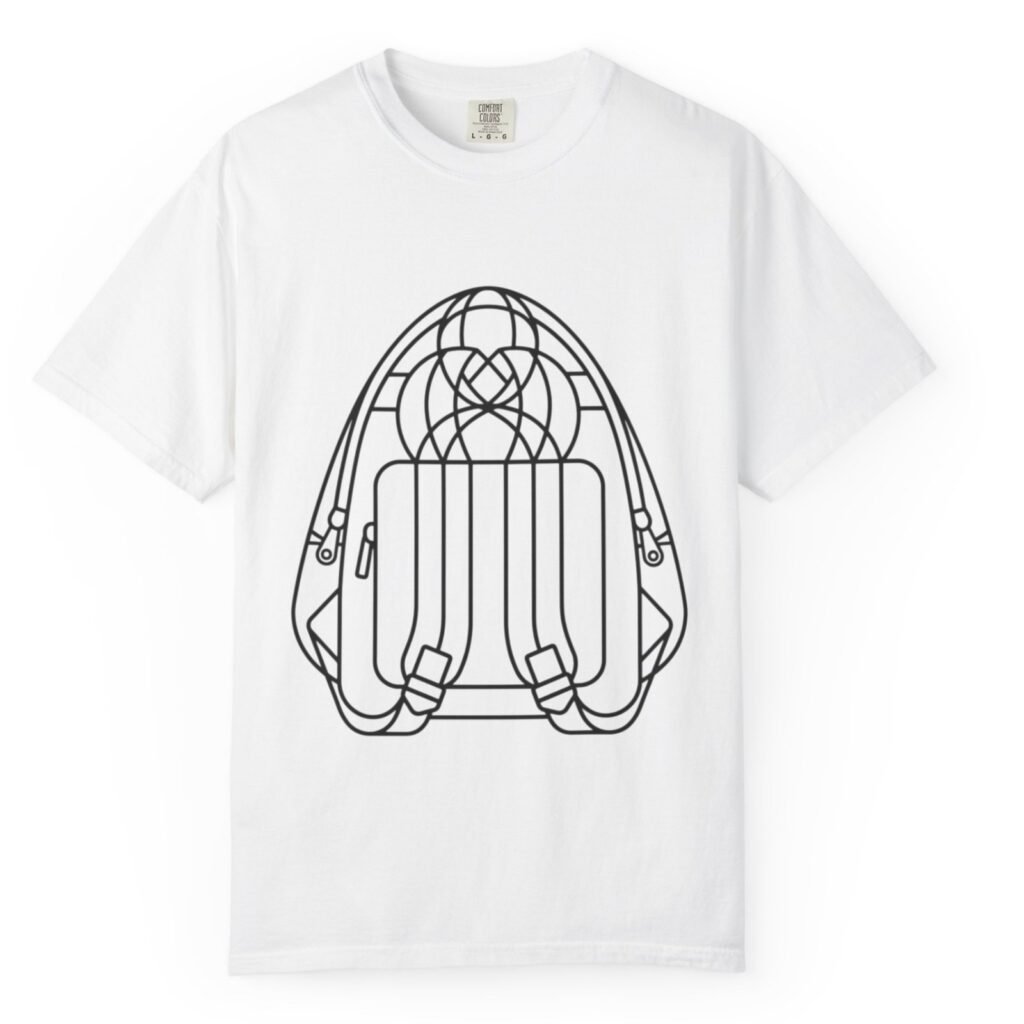
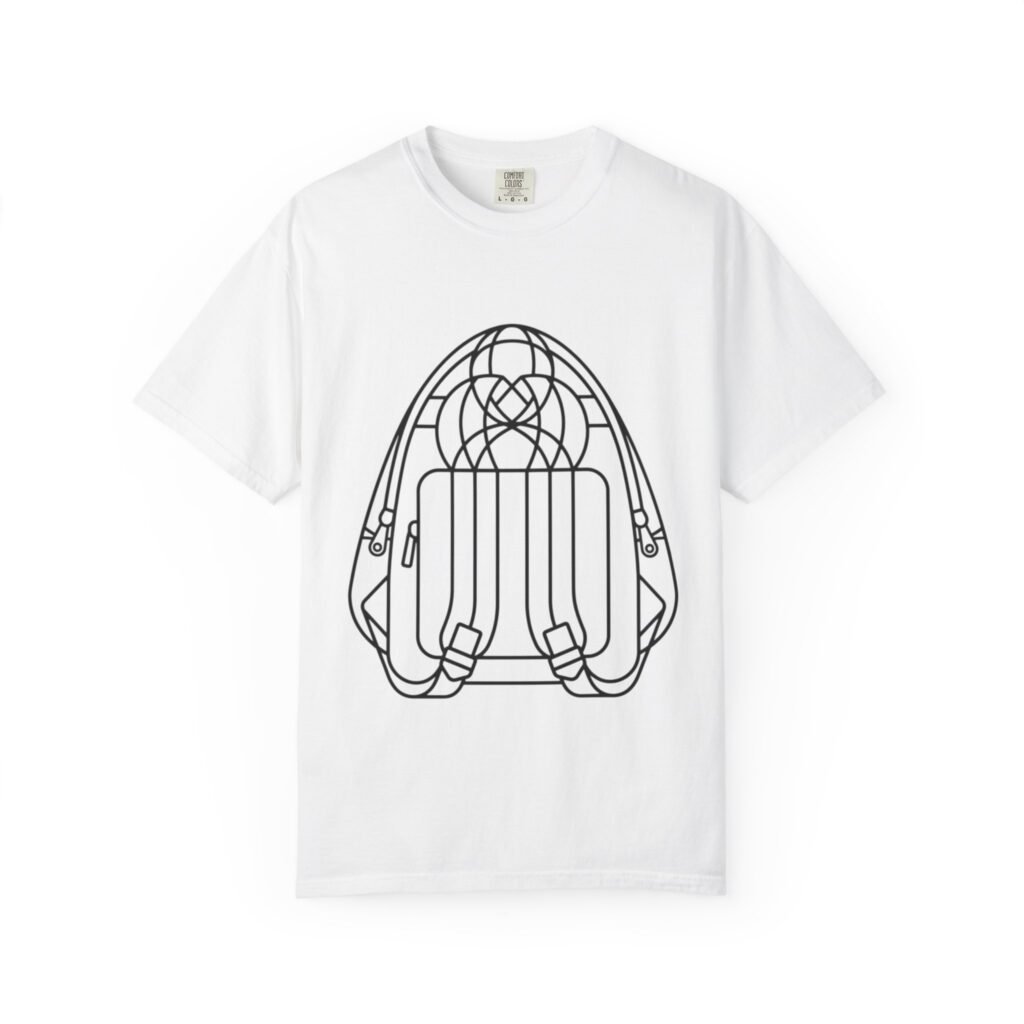
A plain wall, a neutral rug, a wood floor or a large sheet of poster board all work. Avoid busy patterns that compete with the design on the shirt. Since our tees favor minimalist line art, a calm background keeps the graphic as the focal point instead of fighting it.
3. Lay the shirt flat and shape it
Smooth out wrinkles by hand first. Fold the sleeves back slightly to add shape, or roll them under for a cleaner rectangle. Small pieces of tape on the underside can hold folds in place while you shoot.
4. Shoot straight down
Stand directly over the shirt, camera parallel to the floor, not at an angle. An overhead angle keeps the design undistorted, which matters if the point of the photo is showing off a specific graphic.
5. Add one or two props, sparingly
A coffee cup next to a coffee-themed tee, a small plant next to a plant tee, or a notebook and pen nearby can add context without cluttering the frame. One or two props is usually the ceiling before a photo starts feeling busy.
6. Shoot vertical for Pinterest
Pinterest favors a vertical aspect ratio, generally taller than it is wide. Frame the shot vertically from the start rather than cropping a square or horizontal photo afterward, which usually loses detail.
Simple edits that help
| Adjustment | Why it helps |
|---|---|
| Straighten the horizon | A tilted shot reads as careless even with good lighting |
| Brighten slightly | Most phone photos default a touch dark indoors |
| Increase contrast a little | Helps a line-art graphic stand out against the fabric |
| Avoid heavy filters | Color shifts can misrepresent the actual shirt color |
Common mistakes to avoid
- Shooting at an angle. It distorts the print and makes the shirt look smaller than it is.
- Busy backgrounds. A patterned rug or cluttered desk pulls attention away from the design.
- Mixed light sources. Combining a lamp with daylight often creates an odd color cast. Pick one light source and stick with it.
- Wrinkled fabric. A quick smooth by hand, or a low-heat iron under a cloth as described in our t-shirt care guide, makes a noticeable difference.
Frequently asked questions
Do I need a real camera for good flatlays?
No. Most modern phone cameras handle flatlay photography well, since the subject is static and the light does not need to be very bright.
What background color works best?
Neutral tones, white, light wood or a soft gray, tend to work with the widest range of shirt colors and graphics.
Should I show the whole shirt or crop in on the design?
Both work well on Pinterest. A full-shirt flatlay shows fit and color, while a closer crop highlights detail in the graphic. Posting a mix of both tends to perform better than only one style.
Looking for a design that photographs well straight out of the box? Browse the apparel collection for tees built around clean, single-line graphics.